GeoCities.us
» Heartland » Hills
|
GeoCities.us
» Heartland » Hills |
Get your FREE home page! |
 |

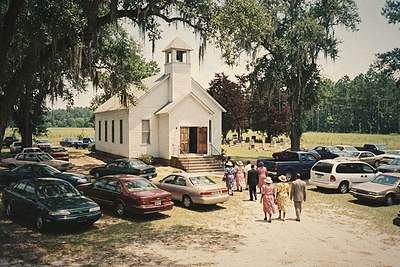
 Cedar Spring Missionary Baptist Church One Hundred Years 1899 – 1999 Centennial Homecoming · Sunday, August 15, 1999 Dear friends and family, On the third Sunday in August, about two hundred of us came home to Cedar Spring to give thanks for one hundred years. Some of us had only to walk across the road. Others drove all night from Atlanta, from Detroit, from Chicago, from as far as California, to sit again in the church where their mothers and fathers and grandparents were baptized, married and buried. Many of you have asked for the pictures, and those who could not come have asked what it was like. My grandson Jeff took the pictures and has kindly put them on the computer for me, and I have written down the day as well as I can. I am Olive Bivens. I taught first grade in this county for thirty-eight years, and I have been the clerk and historian of Cedar Spring since 1961. The history I read at the afternoon program is on its own page: Our History, from the Brush Arbor to Today.
Morning Worship
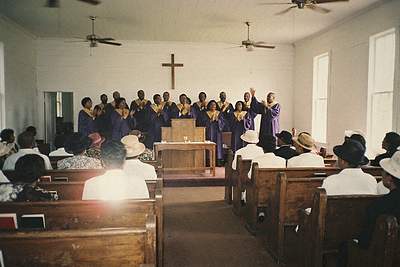
Our pastor, the Reverend Gerard McCormick, welcomed everyone home and then gave the pulpit to our homecoming preacher, the Reverend Roosevelt Freeland of Detroit. Reverend Freeland's grandparents were members here before they went north in the 1920s, and his mother brought him back every summer of his boyhood. He preached from the 126th Psalm, on coming home with rejoicing, and there was not a dry eye in the house, mine included. Dinner on the Grounds
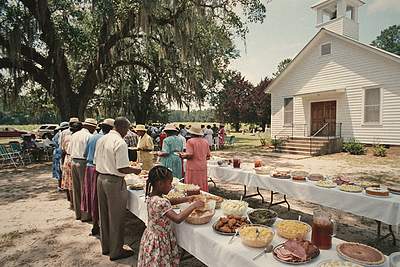
I counted fourteen sweet potato pies. Sister Bertha Sebring's coconut cake was gone before I got there, as it is every year. The Afternoon Program
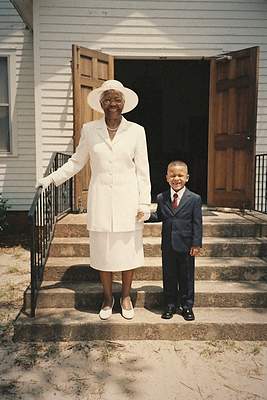
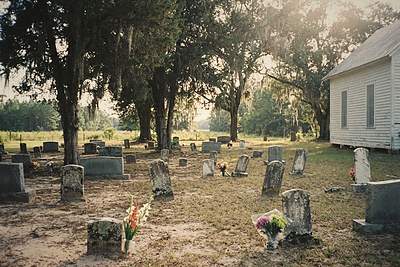
Those Who Came Home Before they left, many of them walked out back to the old part of the cemetery to find their people. Our founders are buried there, under the cedars. The young men of the church cleaned the graves the Saturday before, and families laid flowers.
One hundred years. We are still here. Thank you, every one of you, who came home, who cooked, who gave, who prayed, and who sent your love when you could not come. God willing, I will see you at homecoming next August, the third Sunday as always. Yours in Christ, Friends who have visited this page:    
Write to Mrs. Bivens at [email protected] (Jeff reads the mail to me on Sundays.) Last updated Monday, August 30, 1999 Pictures and computer work by Jeff Calahan, Atlanta |