GeoCities.us
» Heartland » Plains
|
GeoCities.us
» Heartland » Plains |
Get your FREE home page! |
 |

 OLLIE HARVESTING
|
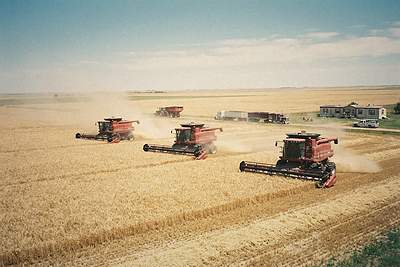
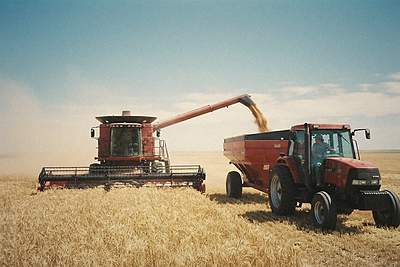
We're home! We pulled in on Saturday, September 18, after four months on the road, and I finally have time to sit down and put this together for everybody who has been asking. I'm Donna. My husband Randy and I are custom harvesters, which means we own the combines and trucks, and every summer we take them north with the wheat as it ripens, and cut for the same farmers year after year, from Texas to North Dakota. Randy's dad, Bill Ollie, started cutting for other people in 1951, and Randy took the crew over in 1985. Bill is 77 and still rides along for the Kansas run, and still tells Randy how to set the concave. Randy runs the crew and a combine. I cook, drive truck, keep the books and write this page. Our son George is 15 and ran the grain cart this year for the first time. Our daughter Kendall is 13 and helps me with the meals, and is the reason any of us had a vegetable all summer.
THE 1999 RUN
Bu/A is bushels per acre, our average for the stop. Rain days are days we couldn't cut. Everything up to North Dakota was winter wheat, planted last fall. North Dakota was spring wheat, planted this spring, which is why it's last. Our customers along the way: Tom Jacobs at Vernon, who we've cut for since 1979; Fred Zaragoza and his neighbors at Enid; Donnie Shoffner at McCook; Kenny Lieberman at Philip; and Gary Fergus and his brothers at Minot, plus a lot of good people in between. A DAY ON HARVEST
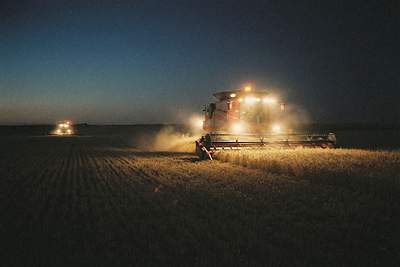
It goes like that seven days a week until it rains. Then everybody fixes what's broken, does laundry, calls home and sleeps for twelve hours.
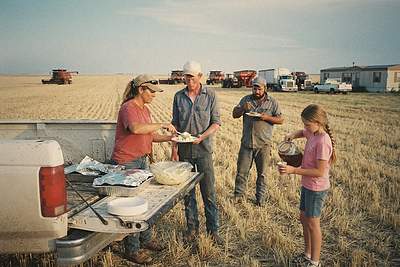
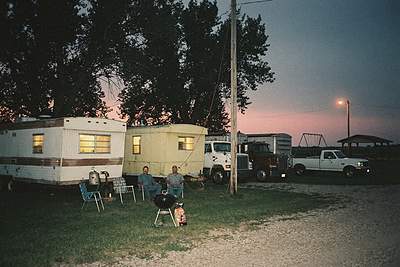
HARVEST MEALS When you have eight hungry people in the field, you don't cook small. I cook in the trailer house in the mornings and we carry dinner out to the field at noon and supper about seven, in roasters and coolers in the back of the pickup, and serve off the tailgate. The men eat in shifts so the combines keep moving. Our standbys:
On the Fourth of July we were cutting at home, so we had supper in the field with the town's fireworks going off on the horizon while the combines kept running.
THE CREW Besides us, we had four hired men this year, and they were a good bunch:
THE EQUIPMENT
THE KIDS People ask how the kids stand it. They grew up on it. George was riding in the combine cab with his dad when he was three. What they miss: their friends, the swimming pool, the county fair (we always miss it), sleeping in, and a bedroom with a door. And they start school late every year. This year they started on Monday the 20th, a month behind everybody, and their teachers send work along with us in May and are very good about it. What they learn: how to work, how to fix things, how to talk to anybody, the whole middle of the country, and what a day's pay feels like, since they both get one. George knows more about hydraulics than I do. Kendall can feed eight men out of a trailer house kitchen the size of a closet. Next year she says she wants to drive truck. We'll see. A WORD ABOUT PRICES I don't want to end on a sour note, but I'd be lying if I said it was a good year. The crop was decent, and in Kansas it was very good. But this summer the elevators were paying a little over two dollars a bushel for wheat, and when you figure what it costs a farmer to raise it, a lot of our customers lost money on every acre. When the farmers are hurting, we're hurting too, because there's pressure on what we charge, and fuel and parts don't get any cheaper. A couple of farmers we've cut for for years told us they don't know how much longer they can hang on. Please remember them when you buy a loaf of bread. We'll be back on the road next May. Until then, we're fixing combines in the shed and the kids are catching up on their homework. |