GeoCities.us
» Heartland » Ranch
|
GeoCities.us
» Heartland » Ranch |
Get your FREE home page! |
 |

 Chelsea's Lambs
|
Hi, I'm Pamela Cacho. I keep the books at a farm-supply co-op here in central Ohio, and my husband Willis works for the county highway department. We live on twelve acres with a pole barn, a small pasture and, from March to July every year, a couple of lambs who think they own the place. Our daughter Chelsea is 15 and just started tenth grade. This was her sixth year showing market lambs in 4-H. I put this page together for the grandparents in Michigan and Kentucky who couldn't come to the fair, and for anybody who has ever wondered why a family would spend a whole week of their summer sleeping in a sheep barn. |
|
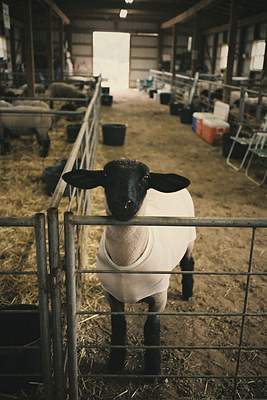
March: Picking Lambs On Saturday, March 20, we drove two counties over to a sheep breeder Chelsea has bought from before, and she spent an hour in his pen looking at Suffolk wether lambs before she picked two. Suffolks are the ones with the black faces and black legs. You want a lamb that's long, wide across the back, square on its legs, and a little bit bold. Chelsea also wants one that looks at her. I've stopped asking what that means. Dusty was the bigger one, 58 pounds that day, $165. Moose was the smaller one, 52 pounds, $150. The name is a joke. Moose has a sense of humor about it. |
April to July: The Work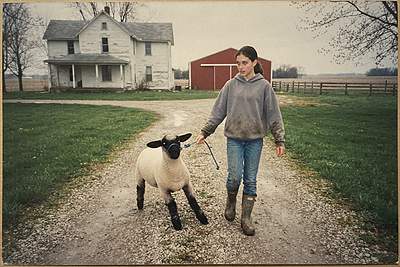 April. Chelsea and Dusty on the driveway, and Dusty not convinced yet. People think the fair is the work. The fair is the easy part. The work is the four months before it:
|
Fair Week, July 26-31
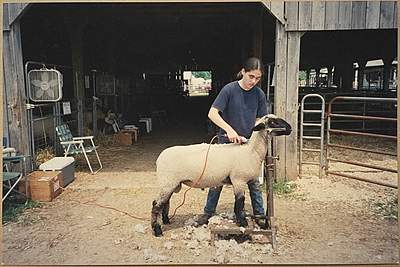 Tuesday morning. Chelsea clipping Dusty on the stand. By show time his wool was down almost to the skin, so the judge can see and feel the muscle. Showmanship is judged on the kid, not the lamb: how well she handles him, sets him up, keeps him between herself and the judge, and answers questions. Chelsea showed Dusty and placed third in senior showmanship. The judge asked her what Dusty's rate of gain was, and she knew. I was so proud I had to go stand by the fans. |
Wednesday: The Market Show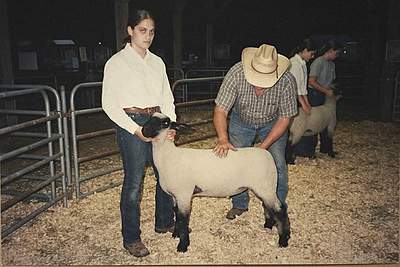 Chelsea bracing Dusty, and the judge feeling his back. That's the longest ten seconds of the year. In the market class it's the lamb that's judged, on how good a market animal he is. Lambs are shown by weight classes, and the class winners come back to compete for each division. Dusty won his class, and then the judge slapped him on the rump and made him Champion of the Middleweight Division. That's a purple ribbon, and it's the first purple Chelsea has ever won. Willis whooped so loud the judge looked over. Moose was in a big class of heavier lambs and placed fifth, which is respectable for a lamb named Moose. 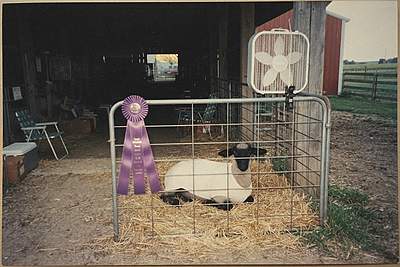 The purple, on Dusty's pen, with Dusty not the least bit impressed. |
Saturday: The Sale
Each kid can sell only one animal through the junior fair sale, so Chelsea sold Dusty. A local business that buys at our fair every year bought him at $3.10 a pound, which on 132 pounds is $409.20. That's far more than the market price. The buyers do it to support the kids, and they deserve every thank-you note they get. Chelsea wrote hers that night. Moose didn't go through the sale. He went on the packer's truck at the market price, which this year was well under a dollar a pound. The money goes into Chelsea's college account, except for what she needs to buy next year's lambs. |
|
The Hard Part Everybody asks, so here's the honest answer. Market lambs are market lambs. Chelsea has known that since she was nine, and she knows it better than most grown-ups do. She was fine all week. She was fine at the sale. She was fine loading them on Saturday afternoon. Then she got in the truck and cried all the way home, and so did I, and Willis turned the radio up and pretended he had something in his eye. By Monday she was looking at the breeder's ad in the paper. That's how it goes every year. |
What 4-H Teaches
|